Aquatic vegetation and algae management keeps lakes, reservoirs, canals, and ponds functional, safe, and ecologically balanced. Left unmanaged, invasive plants and harmful algal blooms can restrict water flow, degrade water quality, threaten sensitive habitat, and interfere with irrigation, recreation, flood control, and drinking-water supply.
Sequoia Advanced Systems supports public agencies, water districts, environmental consultants, and licensed applicators with mission-configurable autonomous surface vessels for precise treatment, repeatable monitoring, and defensible documentation. Caliber 3.0 extends the reach and capacity of experienced field teams while keeping professional judgment, product selection, permitting, and application oversight with the qualified people responsible for the work.
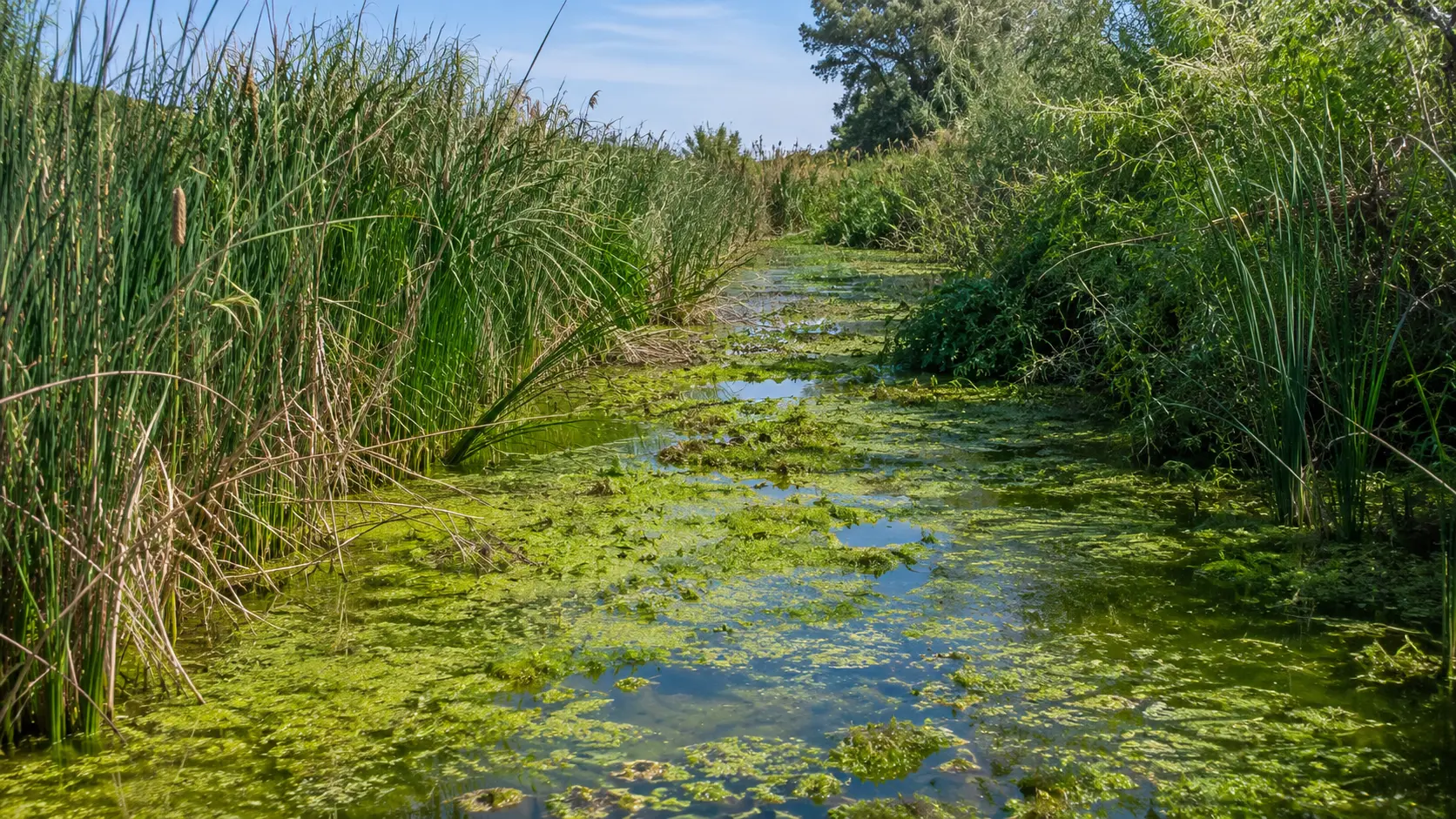
Nuisance and invasive aquatic vegetation affects far more than appearance. Submersed species such as hydrilla and Eurasian watermilfoil, along with floating species such as water hyacinth and salvinia, can outcompete native plants, alter dissolved oxygen, restrict water movement, and reduce habitat quality. Harmful algal blooms, particularly cyanobacteria blooms, may produce toxins such as microcystins that threaten people, pets, livestock, wildlife, and drinking-water operations.
Aquatic pesticide applications are regulated through product labeling, applicator requirements, water-quality permits, and site-specific operating conditions. In California, aquatic weed and algae control may require NPDES permit coverage through the State Water Resources Control Board, along with compliance with Department of Pesticide Regulation requirements and federal FIFRA labeling.
Accurate records of what was applied, where it was applied, when the work occurred, and under what conditions are essential to permit reporting, operational review, and public accountability.
Irrigation and flood-control districts depend on open canals and channels. Vegetation that restricts flow can reduce delivery capacity, interfere with gates and pump intakes, and increase localized flood risk. Reservoir and drinking-water operators must also manage bloom conditions, taste and odor issues, and potential toxin risks at the source.
Dense vegetation can displace native plant communities, alter aquatic habitat, harbor mosquito larvae, and create hazards for recreation and field crews. Harmful blooms can close beaches, restrict recreation, and disrupt drinking-water operations.
Consistent treatment, monitoring, and documentation protect public use, operational reliability, sensitive habitats, and the long-term function of the waterbody.
The limits of conventional fieldwork are usually practical rather than theoretical:
Autonomous surface vessels are particularly effective in missions that reward precision, repeatability, shoreline access, and defensible documentation.
Preplanned waypoint routes follow consistent treatment lines across each pass. The recorded mission path makes treatment, re-treatment, and follow-up monitoring comparable over time.
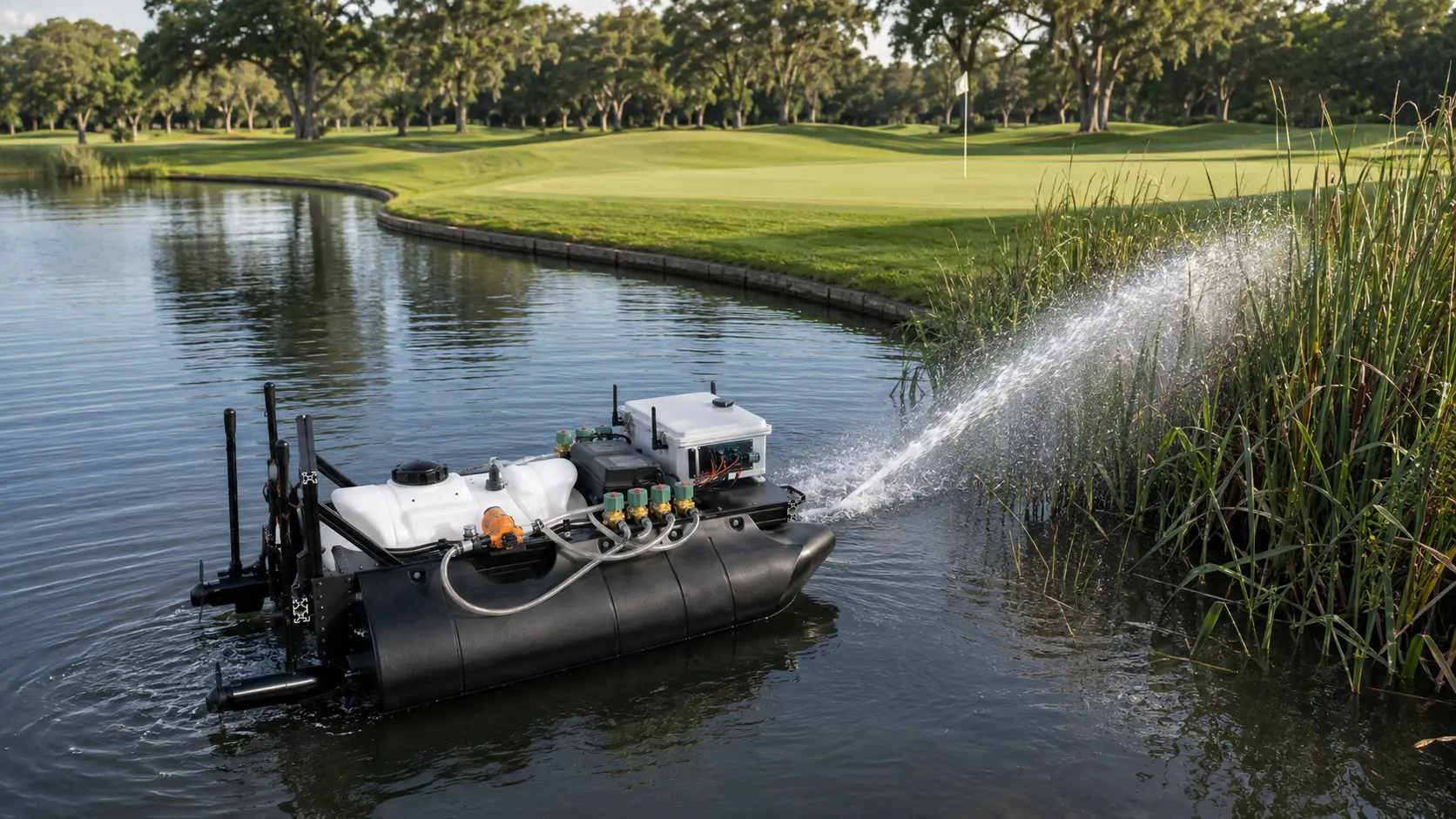
A variable-speed pump and autopilot-controlled valves deliver products within defined zones at defined rates. Precise navigation reduces overlap, drift, and unnecessary product use.
Caliber 3.0 records the vessel’s path and application activity as the work occurs. Geolocated and time-stamped records support permit reporting, efficacy evaluation, and year-over-year comparison.
The operator supervises the mission from land, reducing exposure to chemicals, heat, unstable boats, and repetitive on-water operation.
A shallow-draft, shore-launchable platform can reach reservoir margins, narrow canals, ponds, and obstructed waterways without a conventional boat ramp.
Treatment, sonar, imaging, and water-quality payloads can connect assessment, application, and follow-up monitoring within a coordinated field program.
The licensed applicator remains at the center of the work. Product selection, dosing, permitting, label compliance, site judgment, and mission supervision remain with qualified professionals. Autonomy improves how the treatment plan is executed, measured, and documented.
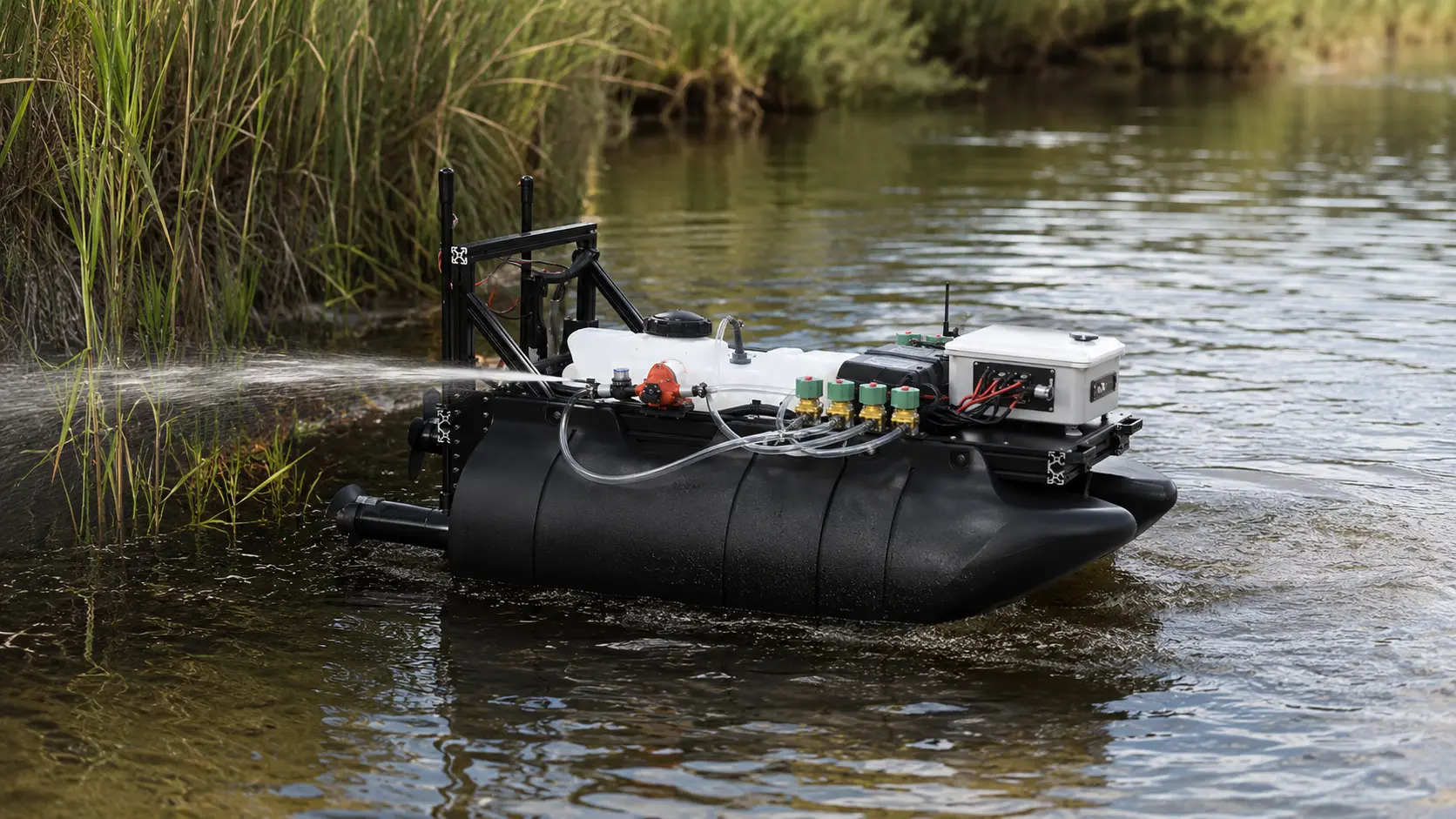
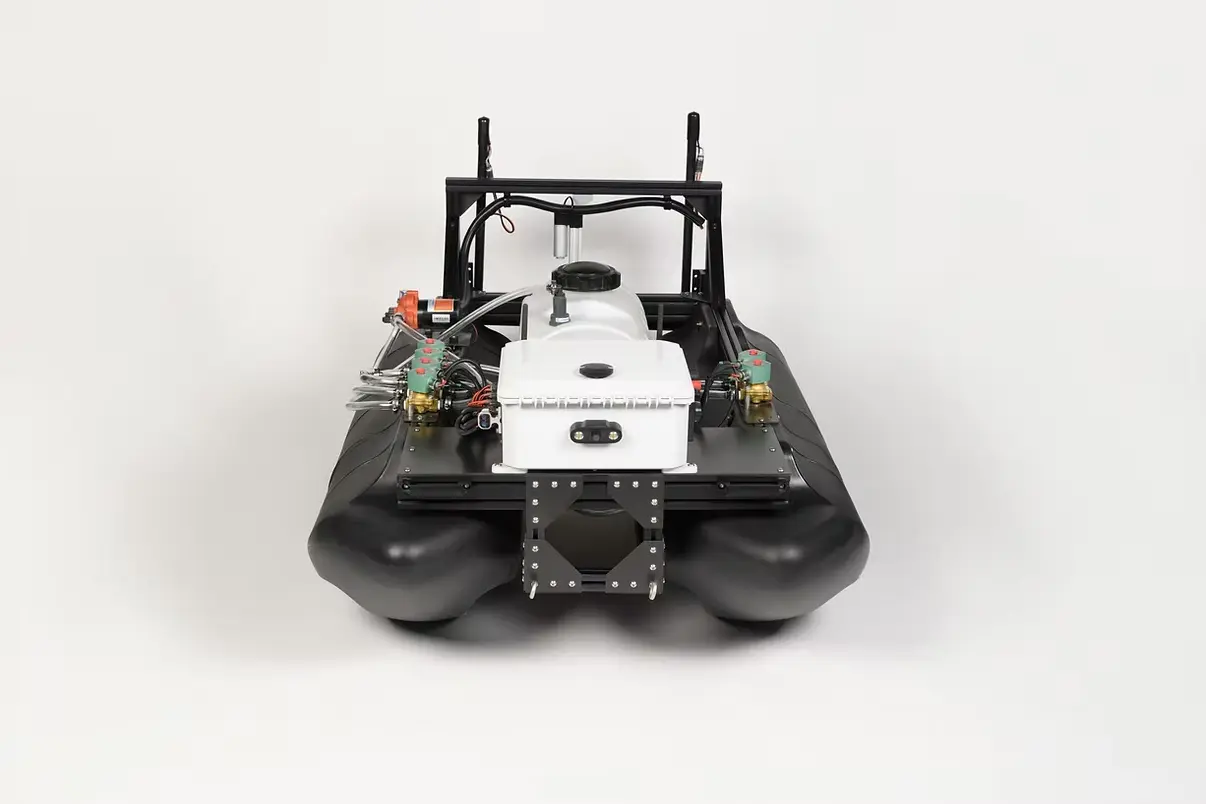
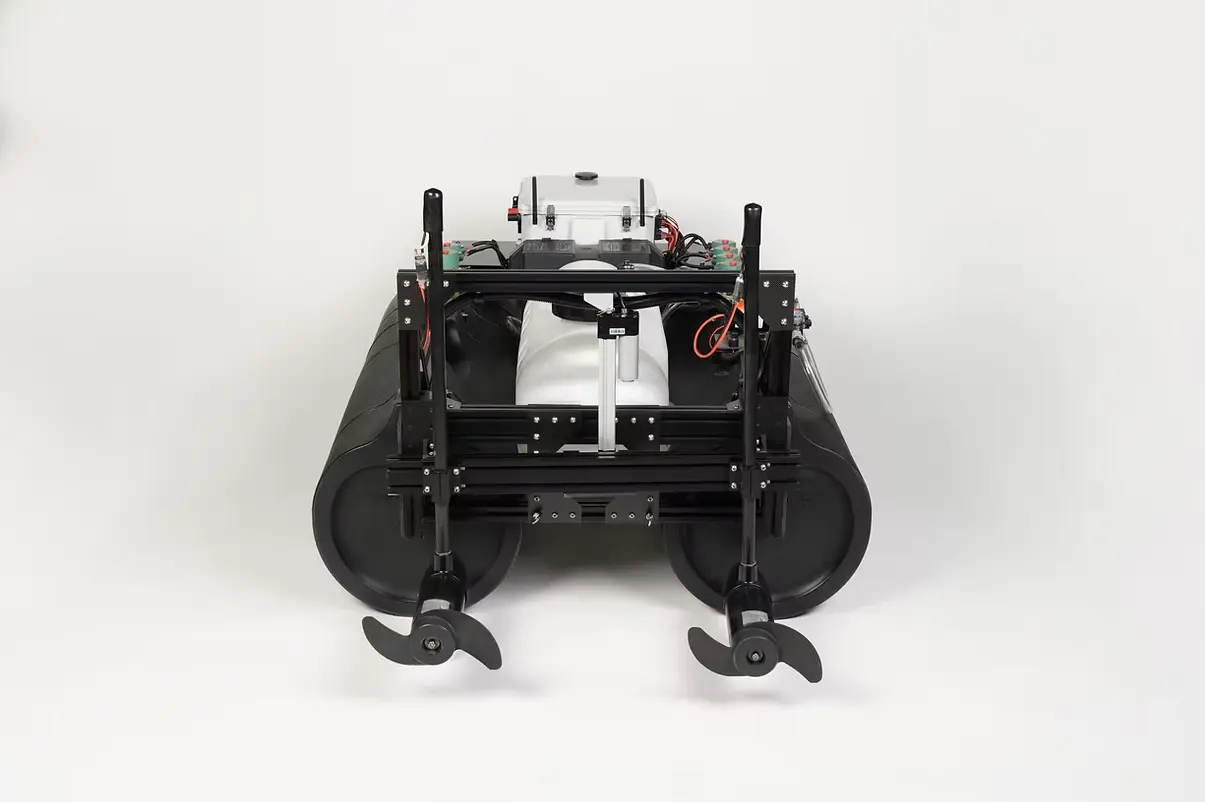
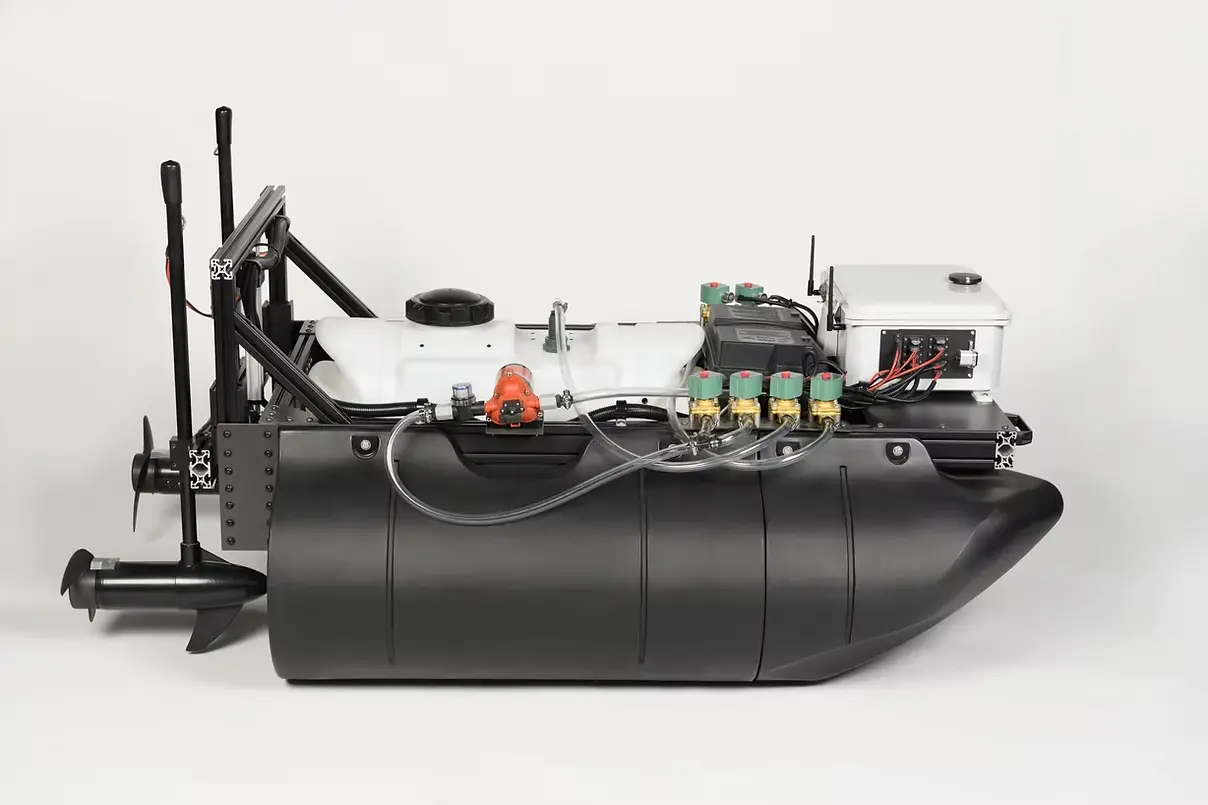
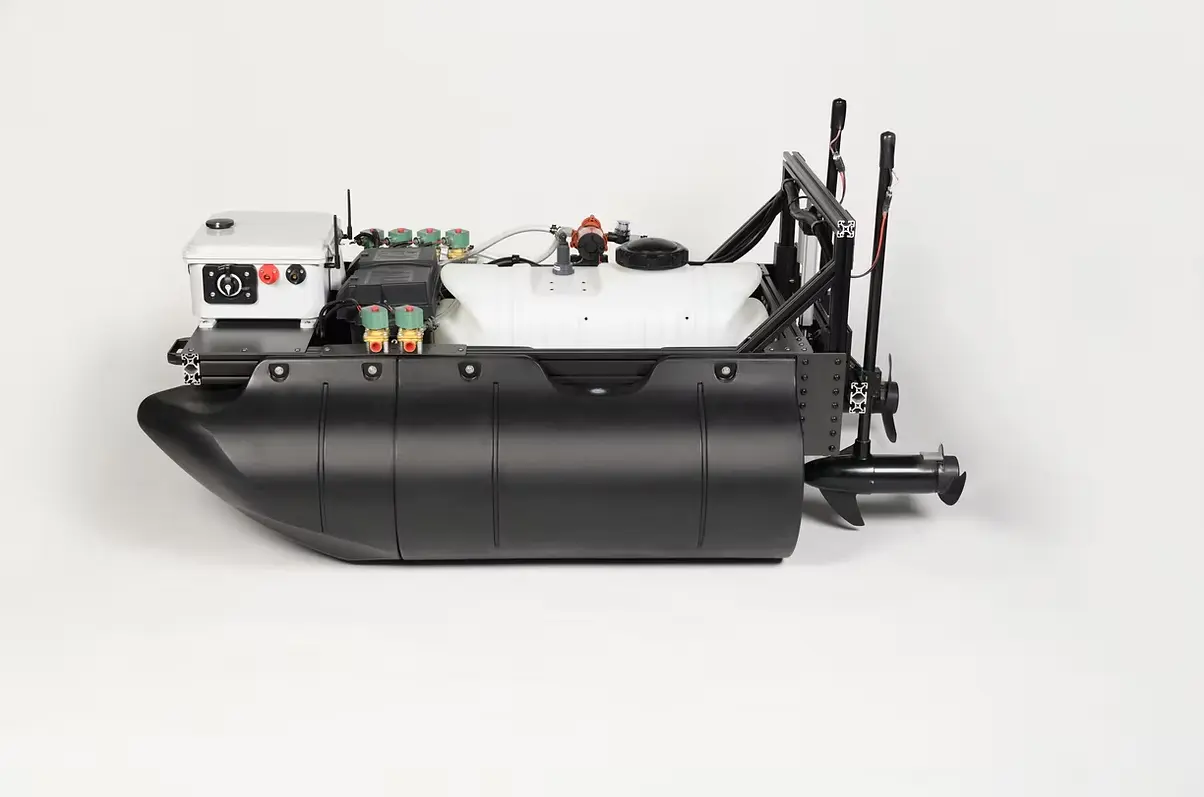
Caliber 3.0 is Riparian Systems’ precision aquatic treatment vessel, configured, deployed, and supported in California by Sequoia Advanced Systems. Built on a shore-launchable, low-draft platform with GPS waypoint navigation and autopilot-controlled treatment systems, Caliber 3.0 delivers herbicide and algaecide exactly where intended, with minimal drift, documented coverage, and repeatable application records.
Specifications per Riparian Systems; confirm current configuration for procurement. Deployment models and long-term support are described under How we work.
Discuss a Treatment ProgramAutonomous surface vessels do not need to replace conventional equipment to improve watershed operations. In many programs, their highest value comes from extending the reach, precision, documentation, and monitoring capacity of the teams and tools already in place.
A surface vessel equipped with sonar, imaging, or water-quality sensors can document treatment boundaries, shallow margins, depth changes, vegetation extent, and access constraints before the treatment mission begins. This improves route design, helps isolate priority zones, and gives the licensed applicator a clearer operating picture.
Large or complex projects may use more than one platform, allowing each to operate where it provides the greatest value:
Mechanical harvesting removes biomass but may not provide long-term control by itself. Caliber 3.0 can support targeted follow-up treatment along regrowth zones, inaccessible margins, and areas requiring precise application.
The same mission framework can support efficacy monitoring through repeat routes, imagery, sonar, or water-quality sensors. Follow-up data helps determine where treatment succeeded, where conditions changed, and where additional work may be needed.
Defined routes, exclusion zones, controlled application rates, and recorded coverage help field teams work near sensitive aquatic habitats with greater precision and accountability.
Where soft shorelines, narrow channels, shallow water, obstructed margins, or lack of a boat ramp complicate conventional access, a shore-launchable autonomous platform can perform reconnaissance, monitoring, targeted treatment, or documentation without requiring a full-sized crewed vessel.
GPS routes, treatment paths, sensor measurements, imagery, and time-stamped mission logs create a record that connects assessment, treatment, monitoring, and follow-up work.
The result is not a choice between autonomous and conventional operations. It is a better-coordinated field program in which each tool is used where it performs best. Sequoia Advanced Systems helps organizations determine where Caliber 3.0 can increase capacity, precision, habitat protection, and documentation within the treatment methods they already use.
Aquatic vegetation and algae can restrict flow, reduce delivery capacity, interfere with control structures, and threaten pump intakes. Repeatable, documented treatment helps maintain conveyance performance while producing the as-applied records needed for permit reporting, operational review, and future treatment planning.
A precise and well-documented treatment capability allows a licensed applicator to supervise more repeatable coverage, produce stronger compliance records, and connect treatment with environmental monitoring. Consultants can add autonomous capability to existing services without building an internal robotics division.
At drinking-water sources, algal blooms can create taste, odor, operational, and toxin concerns. Geolocated treatment and repeatable monitoring help operators identify changing conditions, act earlier, protect intakes, preserve sensitive habitat, and document decisions for regulators and the public.
Dense vegetation and stagnant margins can support mosquito habitat, while cyanobacteria blooms may trigger public-health advisories and recreational closures. Repeatable monitoring and targeted treatment support early response, habitat management, and defensible public communication.
Recreational lakes and ponds must remain safe, functional, and visually maintained. Precise, low-drift treatment supports water quality, habitat preservation, recreation, and aesthetics while documenting what was applied, where it was applied, and when the work occurred.
Licensed applicators are often the limiting resource in treatment operations. Increasing the repeatable coverage each applicator can plan and supervise, while automating mission documentation, improves field capacity and margin on contracts the company already holds.
Aquatic vegetation management is a mature discipline supported by experienced professionals and established control methods. Most programs begin with assessment: identifying the target species, evaluating water conditions, and mapping the extent of the problem through visual surveys, GPS observations, sonar, aerial imagery, or a combination of methods.
Autonomous surface vessels are most effective when integrated into a broader vegetation and algae management program. Understanding the established treatment methods helps determine where Caliber 3.0 adds the most operational value.
Control programs commonly use several approaches:
Chemical applications are commonly performed from crewed boats equipped with tanks, pumps, hoses, and spray booms, from airboats, or by shoreline crews using backpack and hose-based systems. Licensed applicators plan treatment around the product label, target species, application rate, exposure period, water-use restrictions, weather, and permit requirements.
These methods remain the backbone of aquatic management. The opportunity for autonomy is not to replace them. It is to make selected missions more precise, repeatable, accessible, and thoroughly documented.
The platform matters, but the deployment discipline determines the result. Across aquatic treatment and monitoring programs, successful autonomous missions consistently follow six principles.
Start with the required outcome, not the equipment. Target species, treatment boundaries, exclusion zones, application requirements, permits, and documentation standards define the mission before routes or payloads are selected.
Treatment systems, sonar, water-quality sensors, cameras, and other payloads answer different operational questions. The platform and payload should be selected around the required result.
In regulated fieldwork, an undocumented result is incomplete. Geolocated and time-stamped routes, treatment records, sensor measurements, and operating notes should be created during the mission rather than reconstructed afterward.
Coverage speed matters, but repeatability creates long-term value. A route that can be reproduced next month or next season makes treatment comparable, efficacy measurable, and follow-up work defensible.
Autonomy does not replace experienced crews. It gives licensed applicators, environmental specialists, hydrographers, and field managers more consistent ways to execute their plans. Training should address mission planning, real-time supervision, exception handling, documentation, and field judgment as thoroughly as vessel operation.
A platform creates value only when it is ready to deploy. Maintenance, spare parts, software updates, battery management, operating reviews, and refresher training determine whether a system performs for one season or many.
These principles guide every Sequoia Advanced Systems engagement: define the mission, configure the right platform, support the operator, document the work, and maintain long-term readiness within California’s regulatory and operating environment. The crew remains central. Autonomy is the multiplier.
Yes. Autonomous application changes how the treatment plan is executed and documented. It does not replace the licensed professional responsible for product selection, dosing, label compliance, permit requirements, and site-specific judgment. Under a Buy or Partner model, trained personnel from the customer or partner organization operate the platform under the appropriate professional supervision. Under a SEQAV deployment, roles and responsibilities are defined during mission planning.
Aquatic applications may require coverage under California’s statewide NPDES framework for aquatic weed and algae control, along with compliance with DPR licensing requirements, registered product labels, and site-specific conditions. Requirements depend on the waterbody, product, application, jurisdiction, and responsible entity. Confirm current requirements with the State Water Resources Control Board, the Department of Pesticide Regulation, and the applicable local authorities before treatment. This information is general and is not legal advice.
Caliber 3.0 follows a preprogrammed GPS waypoint route and controls its pump and valves during the mission, applying product inside defined zones at defined rates and recording a documented GPS application path. Autopilot-assisted guidance reduces drift, so treatment is applied where intended.
It can. Because application is tied to mapped treatment zones, controlled rates, and repeatable routes, less product is lost through overlap, drift, or broad treatment of areas outside the target. Actual savings depend on the waterbody, target species, product, treatment method, and mission plan.
Documentation is generated as part of the mission. Caliber 3.0 records a geolocated, time-stamped application path showing where the vessel traveled and where treatment occurred. The resulting coverage records support NPDES reporting, efficacy evaluation, follow-up treatment, and comparison across seasons.
It reduces two common exposures: the operator supervises the mission from shore rather than from a boat near the chemical, and consistency no longer depends on operator fatigue across a long day in sun and heat. It does not remove the need for trained, licensed handling of the product itself.
Shallow-draft, shore-launchable platforms with an adjustable transom are well suited to margins, narrow canals, and vegetated edges that are awkward or unsafe for a crewed boat, and they do not require a launch ramp. Access is one of the clearest advantages of the approach.
Lakes, ponds, reservoirs and their margins, and irrigation and flood-control canals — managed waterbodies where repeatable, documented treatment and monitoring add value. Very large open waters, debris fields, and seasonal marshes are where other platforms or conventional methods often fit better.
Caliber 3.0 can work alongside conventional equipment during larger or more complex programs. It may treat shallow margins while a crewed boat covers open water, document treatment boundaries while a harvester removes dense biomass, or collect post-treatment monitoring data after mechanical or chemical work is complete. Its value is often greatest as part of a coordinated treatment program rather than as a replacement for every existing method.
Submersed species such as hydrilla and Eurasian watermilfoil, floating species such as water hyacinth and salvinia, emergent stands, and various algae including cyanobacteria. The appropriate product and method are always species- and site-specific and governed by the product label.
Because routes are preprogrammed and recorded, a treatment run can be reproduced closely on follow-up visits, which is what makes coverage comparable and re-treatment defensible. For most programs the useful measure is not a single accuracy figure but whether the same route and application can be repeated and documented.
Harmful algal blooms are rapid overgrowths of algae — often cyanobacteria — that can produce toxins such as microcystins. These toxins endanger people, pets, livestock, and wildlife, and can force closures of beaches and drinking-water intakes. Early detection and monitoring are as important as treatment.
It is the planned control and monitoring of nuisance and invasive aquatic plants and algae in lakes, reservoirs, canals, ponds, and other waterbodies. The goal is to keep water flowing, protect water quality and native habitat, and keep the water fit for its intended use — whether that is drinking supply, irrigation, flood control, or recreation.
Herbicides target rooted or floating vascular plants such as hydrilla, milfoil, or water hyacinth, and may be systemic or contact. Algaecides target algae, including planktonic and filamentous forms, and are commonly chelated-copper or peroxide-based. Product selection depends on the target organism, the waterbody, and the label.
Tell us the waterbody, the target species, and the permit conditions. We will help define the treatment plan, platform configuration, and next step.
Discuss a Treatment Program